Teaching the Teachers
A professional-development session
Listen to the talk
Please note: this is a synthesized narration of my script, not a recording of me delivering the session. The live session was recorded to Zoom’s cloud and that recording has expired. I generated this audio from the written talk below using the macOS speech engine, the same tool I used for the textbook narration project, so that the presentation could be heard rather than only read.
Narrated with the macOS say engine (voice: Zoe, Premium) at 165 words
per minute — 4 minutes 42 seconds.
Read the narration script.

The talk
I joined the Asian Debate League in 2019, finishing my degree remotely from Kansas and teaching evening classes over Zoom. When I graduated, got a visa, and moved to Taipei, the two in-person instructors moved on and returned to the United States, and the colleague who was meant to replace them was held up waiting on a visa. I was on my own for three months running a program built for three people.
My boss, our students, and the students’ parents were concerned I would not be able to pick up the slack. That was reasonable — the job was bigger than one person. The coach I was replacing had won the National Debate Tournament and held a Fulbright. He had institutional credibility. I did not.
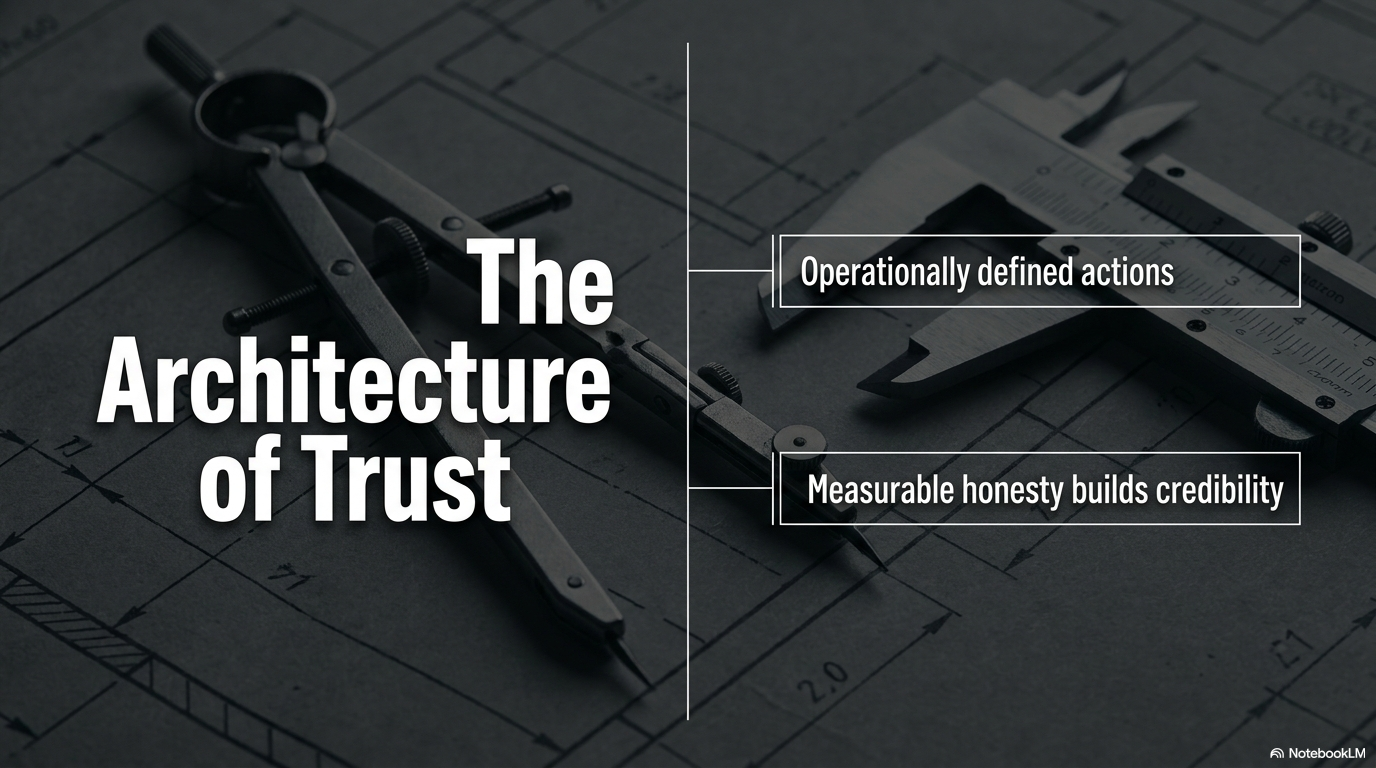
So I built a system instead. I wrote contracts and guidelines for the remote instructors and researchers we could afford to hire, proposed a budget, and wrote a set of targets for myself and my incoming co-workers — clearly defined and observable over time, calibrated against what the previous coach had produced. If I could not borrow his reputation, I could at least offer something the parents and my boss could check. We published the standards and got to work. Retention was high, and we met our targets at the end of the year.
The first lesson: writing things down works. Operationally defining what you are going to do, and being honest about what you can actually measure, is how you build trust before you have a track record.
Where the system had blind spots
We published the guidelines only in English. I had overestimated the English literacy of our staff, students, and parents. We advertise as an English debate program and I teach in English, so I assumed the parameters I thought were important were landing. A lot of them were lost in translation.
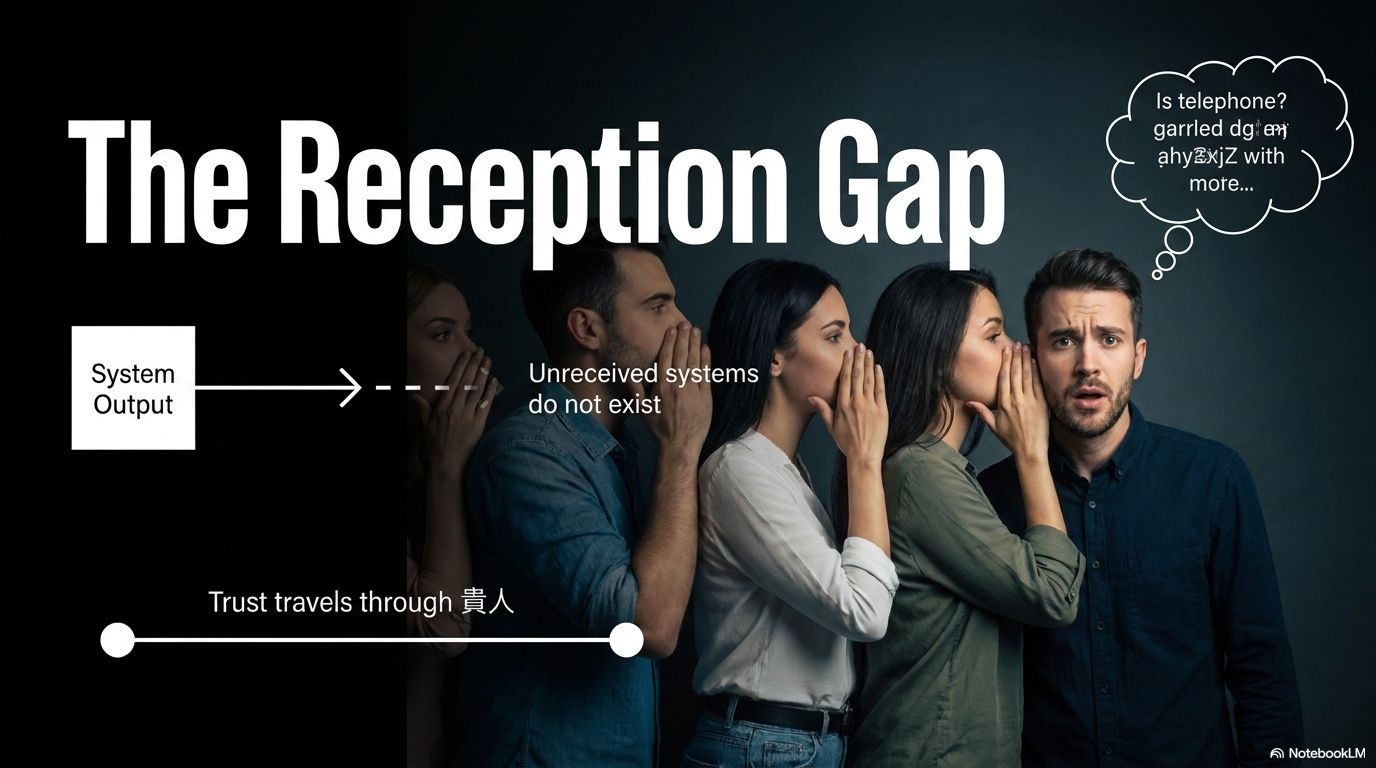
I had also misread how trust actually moves in our industry. Debate sits inside the English cram school world, where information and trust travel by referral, and a small number of parents carry outsized influence with all the others. In Chinese we call them 貴人. If those families are confident in you, they will do the work of assuring everyone else. Written targets in English were not the channel that reached them.
And I had overestimated how much teenagers care about bureaucratic lists. The students did not care that we were hitting research targets. They cared about winning debates and looking capable in front of their peers. What they needed was positive reinforcement, social praise, and one or two arguments that actually mattered to them.
The second lesson: a communication plan that only works in one language, for one audience, is not a communication plan. The targets were solid. The channel was wrong.
What changed
None of this was catastrophic — we retained most students the following year — but it started a shift. We moved away from remote research targets toward in-person coaches with local credibility, which worked in some ways and created incentive problems we had not designed for in others.
I also learned that not every professional relationship is structured the way I assume it should be. I once drafted contracts through several rounds of feedback expecting them to be signed, and was told they were not needed — that we could count on the relationship instead. I found that disorienting at the time. I now read it as a straightforward difference in how agreements are understood to work, and as a reminder that the form collaboration takes is itself cultural.
At a peer mentor’s encouragement I enrolled in Chinese classes, and a colleague and I hired a tutor to come to the office in the mornings, out of pocket. Once I could read a little, I started seeing inequalities I had been walking past — differences in English literacy among students and parents, and real differences between our partner schools, some of which prioritized competitive success while others wanted an enriching experience that would not crowd out regular schoolwork.
As I shifted toward inclusivity and retention, I started seeing behavior issues I was not equipped to handle. I had previously been comfortable with lower retention — competitive debate is hard and demands motivation — but that is a way of selecting for the students who need you least. So I enrolled in a master’s program in special education to learn tools that would support students across the developmental range. I opened four new classes in another city, recruited over thirty students, and several of them became genuinely competitive debaters.
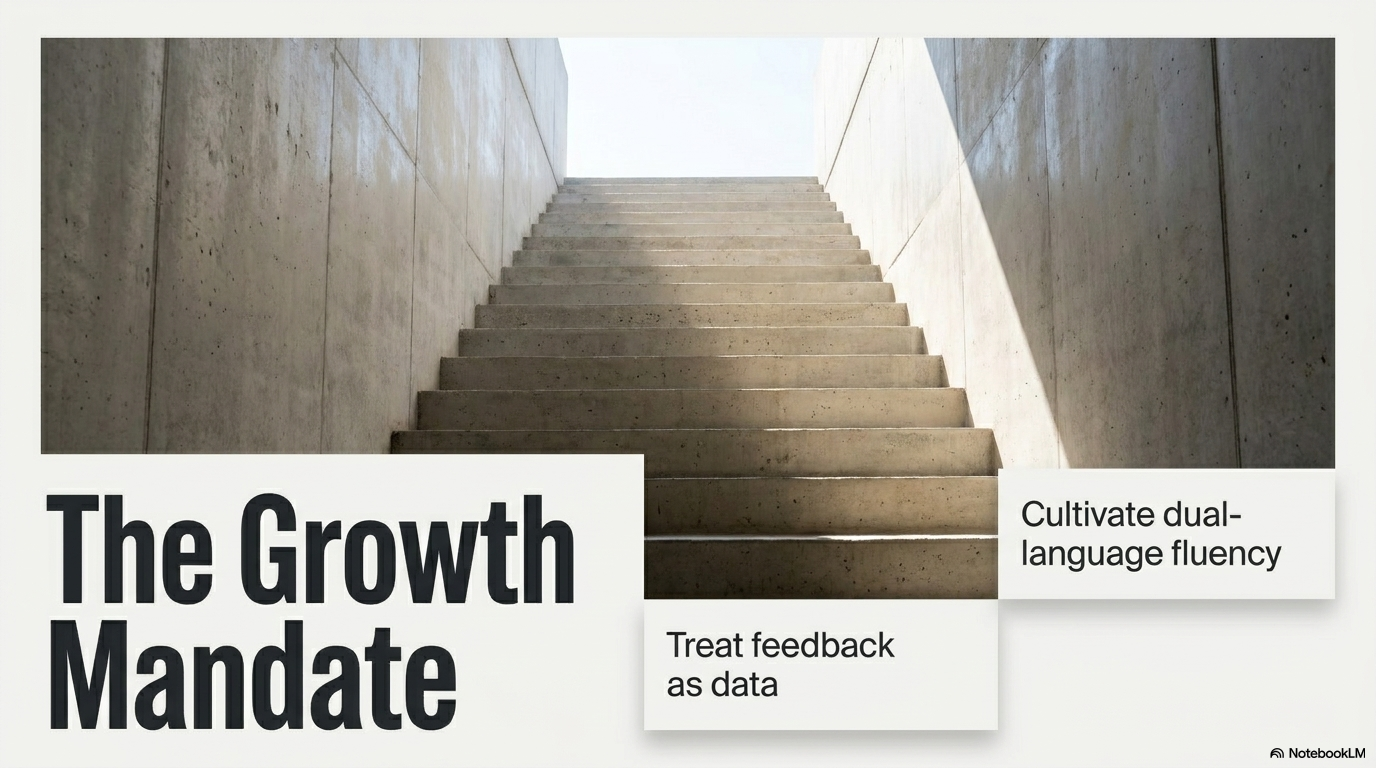
The third lesson, and the one I would most want you to take: specializing is not the same as collaborating. The more I invested in Chinese and in my degree, the less I was actually working with my co-workers, and our instructors became siloed. Students notice that before you do. Whatever you specialize in here, keep bringing it back to the team, or the shared mission quietly stops being shared.
A note on the recording. This session was delivered live and recorded to Zoom’s cloud. That recording has since expired and is no longer retrievable, so the slides and the text of the talk are presented here in its place.